Most large-format projects don’t come down to one print method. They come down to choosing the right method for each surface, material, viewing distance, and environmental condition. Latex, dye-sublimation, and UV-cured printing are the three core digital technologies driving retail, event, and environmental graphics today. Each one behaves differently once it’s installed, and those differences show up fast in real-world conditions.
CR&A Custom owns and operates all three printer types side by side. Many other large format printing companies only use one or two.
Latex Printing: Flexible and Versatile for Everyday Applications
Latex printing uses water-based inks that are cured with heat inside the printer. The ink sits on the surface of the material, forming a flexible layer that works well across a wide range of roll media.
This is the go-to for:
Wall wraps and wallcoverings
Window graphics and perforated window film
Banners and adhesive vinyl
Temporary retail campaigns
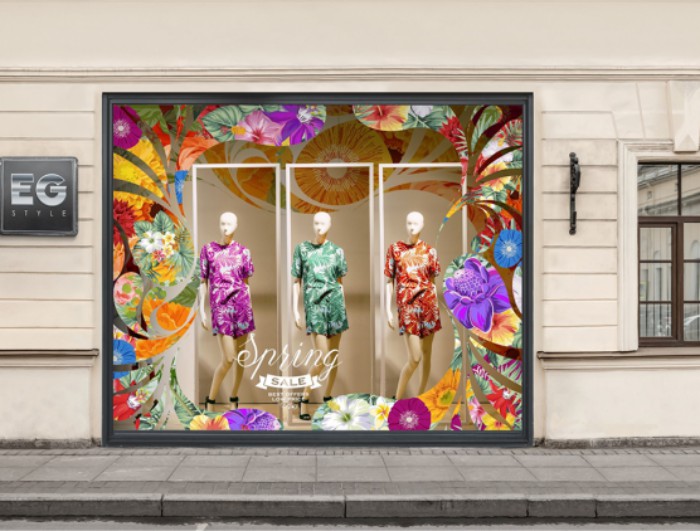
Latex performs well in indoor environments where you need clean color, good durability, and fast turnaround. The prints come off the machine dry and ready for finishing, which helps with tight timelines.
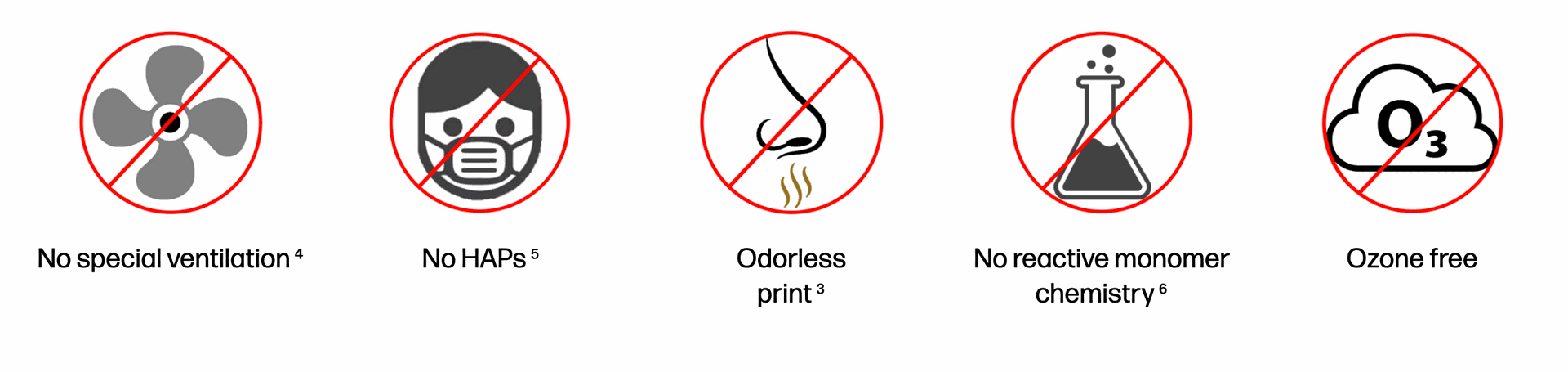
The finish tends to be consistent and relatively low-odor, making it suitable for interior spaces like retail stores, offices, and healthcare environments.
Where latex starts to fall short is on fabric applications that require stretch or backlighting. Because the ink remains on the surface, it doesn’t move with the material the same way dye-sublimation does. You can print textiles with latex, but the result feels heavier and doesn’t diffuse light as evenly.
Dye-Sublimation: Built for Fabric and Backlit Environments
Dye-sublimation printing is a heat transfer process designed specifically for polyester-based materials. The image is printed onto transfer paper, then heat and pressure convert the ink into a gas that bonds directly into the fabric fibers.
The result is a print that becomes part of the material rather than sitting on top of it.
This is the standard for:
SEG fabric lightboxes
Backlit retail displays
Trade show booths and soft signage
Hanging banners and tension fabric systems
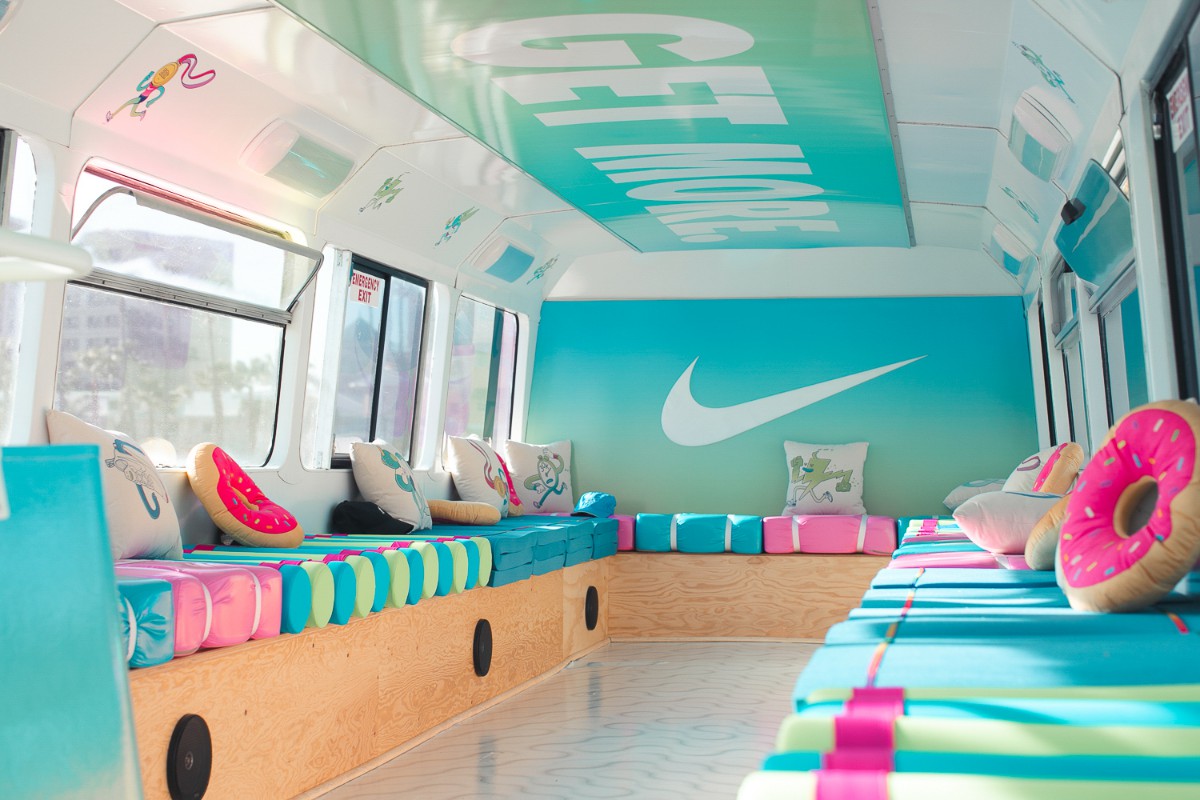
Because the ink is embedded, the fabric remains soft and flexible. It can be folded, stretched, and installed into frames without cracking or distortion. This is critical for SEG systems where tension needs to stay consistent across the frame.
Color also behaves differently. Dye-sub produces smooth gradients and even color fields, which is especially important in backlit applications. Light passes through the fabric more naturally, avoiding hotspots or uneven illumination.
The limitation is material range. Dye-sublimation is restricted to polyester or coated substrates. It doesn’t apply to rigid signage or most non-textile surfaces.
UV-Cured Printing: Rigid, Durable, and Highly Precise
UV printing is a direct-to-substrate process where ink is applied and instantly cured using ultraviolet light. The ink forms a hardened layer on the surface of the material.
This opens up a wide range of rigid and specialty applications:
Acrylic, plexiglass, and PVC
Aluminum composite panels
Wood, glass, and metal
Dimensional retail displays and signage
UV printing produces sharp detail and strong contrast. Text, fine lines, and high-resolution imagery come through clean and defined. It also allows for specialty finishes, including gloss, matte, and layered effects that create texture or raised elements.
Durability is a major advantage. UV-cured ink resists scratching, moisture, and UV exposure, making it suitable for both indoor and outdoor use. We
The tradeoff is flexibility. Because the ink is cured on the surface, it doesn’t perform well on materials that bend or stretch. It’s best used on rigid or stable substrates.
How These Technologies Work Together
Most real-world projects don’t rely on just one of these methods.
A retail environment might use:
UV printing for rigid signage and fabricated display elements
Latex for wall wraps and window graphics
Dye-sublimation for backlit fabric lightboxes
Each technology fills a specific role. Trying to force one method to cover everything usually leads to compromises in appearance or performance.
Lighting conditions also influence the decision. Backlit displays almost always call for dye-sublimation. Direct-lit walls and windows lean toward latex. Structural or dimensional elements point to UV.
Environmental and Production Considerations
All three technologies have moved toward more sustainable production.
Latex uses water-based inks with low VOC emissions and eliminates many of the concerns associated with solvent printing.
Dye-sublimation also uses water-based inks and produces minimal waste once the system is dialed in. Fabric graphics can often be reused or repurposed.
UV printing has improved with low-VOC formulations and efficient curing systems that reduce energy consumption compared to older technologies.
From a production standpoint, latex and UV offer speed and versatility. Dye-sublimation adds an extra transfer step, but the performance on fabric makes that step necessary.
Choosing the Right Method
The decision comes down to the material and the environment.
If the application involves flexible roll media like vinyl or wallcoverings, latex is a strong and reliable choice.
If the application involves fabric, tension systems, or backlit displays, dye-sublimation delivers the best result.
If the application involves rigid materials, dimensional elements, or long-term durability, UV-cured printing is the right fit.
Most projects use a combination of all three, which is why CR&A Custom owns and operates all three. The key is knowing where each one performs best and building the solution around that, rather than trying to force a single method to do everything.