Los Angeles is one of the most active outdoor advertising environments in the country. Street pole banners line major boulevards, construction fence banners wrap job sites, event graphics fill downtown corridors, and promotional banners stretch across building facades. With LA’s wind and weather, choosing the right banner material is critical if those graphics are expected to last.
Santa Ana winds, coastal breezes, and turbulent airflow around tall buildings can put significant stress on banner materials. The wrong substrate can lead to stretching, tearing, or failure at mounting points. The right choice comes down to understanding how different materials perform once they’re installed outdoors.
Most outdoor banner production in Los Angeles relies on two materials: mesh banners and vinyl banners. Each works well in the right environment. The key is selecting the material that matches the wind exposure and installation conditions before the design and fabrication process begins.
Understanding Traditional Vinyl Banners
Vinyl banners have been the standard for outdoor signage in Los Angeles for decades. The material is typically made from PVC with a polyester scrim embedded between layers, giving it strength and dimensional stability. It also prints extremely well, producing rich colors and crisp graphics that hold up under sunlight.
Vinyl is a good choice for many signage applications, including:
Fence banners at construction sites
Event signage for festivals and street fairs
Temporary retail promotions
Indoor banners and trade show graphics
Wall-mounted outdoor banners with limited wind exposure
The smooth surface of vinyl allows for high-resolution printing and strong color saturation. Photographic images, typography, and gradients reproduce cleanly. When the installation area is relatively protected from wind, vinyl delivers excellent visual quality.
Wind exposure changes the equation. Because vinyl is solid, air can’t pass through it so the entire surface acts like a sail. The pressure transfers directly to the banner’s grommets, hems, and mounting hardware.
Over time this stress can stretch the material, tear grommets, or damage edges. Even with reinforced hems and proper mounting, consistent wind exposure shortens the lifespan of the banner.
Our installers can cut small half-moon wind slits into the vinyl to allow some air to pass through and reduce stress on the material. However, these slits can interfere with the appearance of the printed image. They also don’t relieve wind load nearly as effectively as mesh material.
Why Mesh Banners Perform Better in Wind
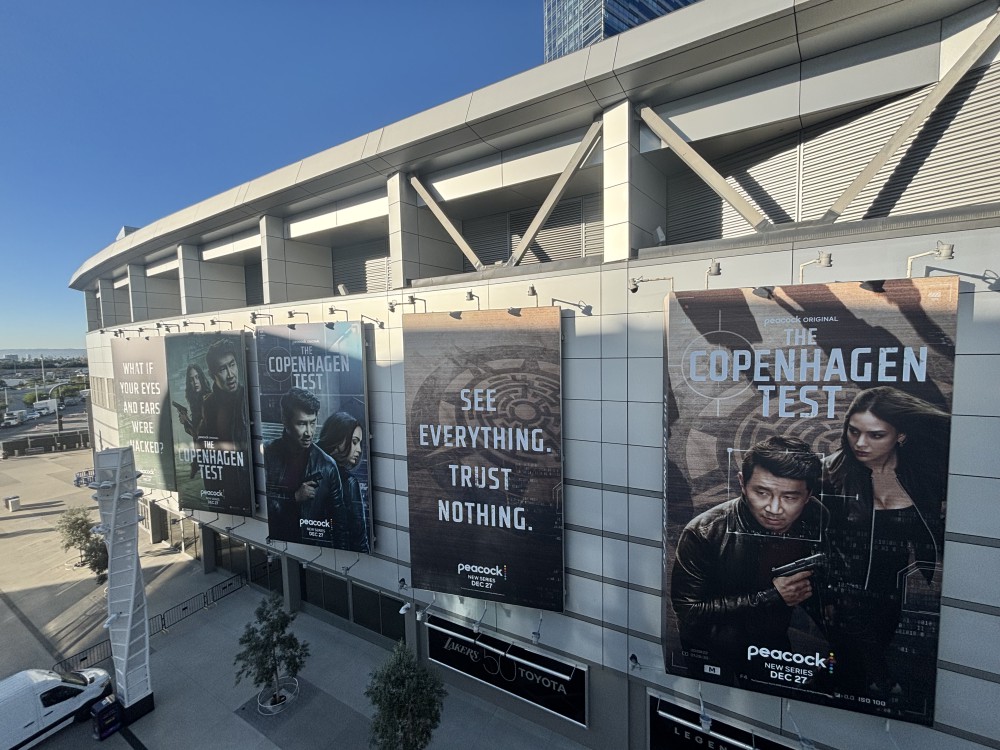
Mesh banner material was developed specifically to handle wind load. The material contains thousands of small perforations that allow air to pass through the banner surface.
From a distance the graphic appears solid, but up close the perforations are visible.
Because air moves through the material, wind resistance drops dramatically. Instead of pushing against a solid surface, wind passes through the banner, reducing stress on both the material and the mounting structure.
Mesh banners are commonly used for:
Large building wraps and scaffold graphics
Construction fence banners
Graphics installed on chain-link fencing
High elevation installations
Stadium and sports venue signage
In Los Angeles, mesh banners are especially common along long runs of construction fencing. These sites are typically exposed to open air, particularly in downtown corridors, coastal areas, and commercial districts. Allowing airflow through the banner significantly reduces the risk of tearing and extends the life of the installation.
Different mesh materials have different openness ratios (the percentage of perforation), which affects how much wind can pass through the banner. A higher openness percentage reduces wind load but slightly softens the printed image. For example:
70/30 mesh (about 30% open area) is common for construction fence banners
80/20 mesh is used when stronger image density is needed
larger architectural mesh may be used for building wraps
Visual Differences Between Mesh and Vinyl
Mesh banners are built for performance, but they do look slightly different from vinyl.
Because of the perforated surface, graphics can appear a little softer than on solid vinyl. Color density may also look slightly lighter since some of the printable surface is removed by the mesh pattern.
At normal outdoor viewing distances the difference is minimal. From across a street or from passing traffic, the perforations disappear and the graphic reads clearly.
At very close range, vinyl still delivers sharper detail. That’s why vinyl remains the preferred option for indoor graphics, retail displays, and installations where viewers stand close to the banner.
Installation Conditions Matter
Choosing between mesh and vinyl requires evaluating the installation environment. Several factors influence the decision:
Height of the installation
Size of the banner
Orientation relative to prevailing wind
Type of mounting structure
Proximity to buildings that create wind tunnels
Viewing distance and graphic detail
Mounting structure and finishing method
Printer compatibility (UV, latex, solvent)
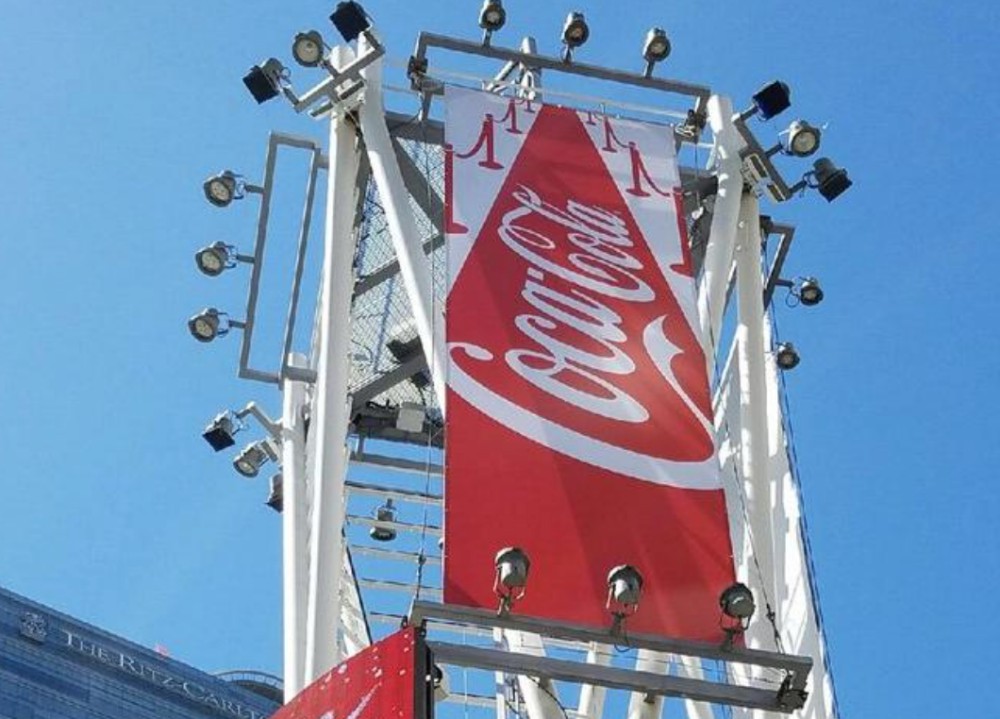
Wind patterns in Los Angeles can be unpredictable. Air moving between tall buildings often accelerates, creating localized pressure points. A banner installed between buildings may experience far stronger wind forces than one placed in an open space.
Professional site evaluation helps determine which material will perform best over time.
Reinforcement and Finishing Matter
Material selection is only part of the equation. Proper finishing is equally important for outdoor banners.
Common finishing techniques include:
Heat-welded hems to strengthen edges
Reinforced grommets spaced for proper tension
Webbing or pole pockets for structural support
Wind slits when appropriate for vinyl banners
These finishing details often determine whether a banner lasts for months or fails within weeks. Experienced large format printers evaluate both the material and finishing specifications before production begins.
Matching the Material to the Location
In most cases the decision comes down to one question: how much wind exposure will the banner face?
If the installation is sheltered, close to a wall, or indoors, vinyl banners offer excellent visual quality. If the banner will face open air, higher elevations, or steady wind exposure, mesh banners provide the structural advantage needed to prevent failure.
Los Angeles presents unique challenges because outdoor graphics are often installed in complex urban environments where wind patterns vary block by block. Choosing the right banner material requires experience with both large format printing and real-world installation conditions.
The most successful banner installations begin well before printing starts, with careful planning, proper material selection, and production expertise that ensures the graphics perform as expected once they’re installed outdoors.
Contact us to help you determine the right material for your banner project.