Video games immerse players in worlds packed with detail, atmosphere, and narrative depth. The challenge lies in taking that rich, digital environment and making it tangible. Translating in-game aesthetics into physical spaces demands both creative vision and technical skill.
That’s where CR&A Custom steps in. They turn digital IP into real-world brand experience through signage, activations, and experiential installations that capture the essence of games like the Battlefield game.
This article explores practical strategies and techniques for gaming brands aiming to create physical activations that resonate with fans and elevate engagement.
Understanding the Digital-to-Physical Challenge in Battlefield Game Activations
Overcoming these challenges requires careful planning and technical expertise. The next step is breaking down the process into actionable strategies that preserve visuals, scale assets, and maintain brand integrity.
Preserving visual fidelity from screen to print
Capturing the exact colors, lighting, and textures from a game is crucial for a convincing activation. Screens emit light and create depth in ways that printed materials cannot. Designers must translate those visuals into physical media while keeping the imagery crisp and true to the source.
High-resolution files, color calibration, and careful material selection ensure that printed graphics match the game’s digital aesthetic. Even small deviations in hue or contrast can reduce immersion, making fidelity a top priority.
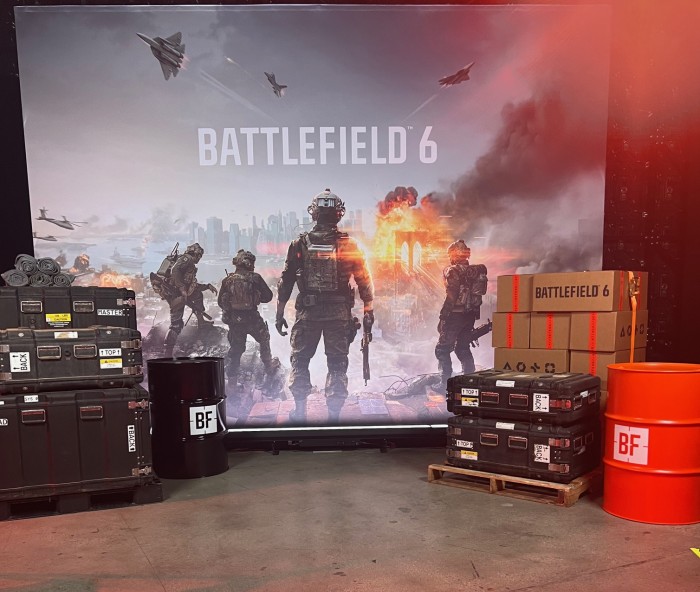
Converting 3D game assets into tangible forms
3D models and in-game environments require interpretation before they become physical objects. Props, signage, and murals must retain dimensionality without appearing flat or distorted.
Designers break down complex assets into components that can be fabricated using materials such as PVC, foam, or acrylic. This step demands technical expertise to ensure the resulting pieces reflect the original design, from sharp edges to intricate textures. When executed correctly, fans experience a tangible extension of the game world.
Scaling assets for large experiential installations
Expanding digital assets into large physical spaces introduces new challenges. A character model that looks perfect on a monitor can lose detail when scaled to a ten-foot wall. Teams must adjust proportions, maintain perspective, and preserve textures at larger sizes.
Planning spatial layout is equally critical—placement affects flow, visibility, and interaction. Proper scaling transforms prints, murals, and installations into immersive environments that guide fan engagement and reinforce the brand experience.
Maintaining brand identity and IP compliance
Adapting a game for physical activation isn’t just about visuals; it also requires strict adherence to intellectual property guidelines. Every logo, color scheme, and character depiction must align with the game publisher’s standards.
At the same time, designers ensure that the activation communicates the brand’s message clearly. Balancing creativity with compliance safeguards the campaign and protects both the game’s integrity and your marketing investment.
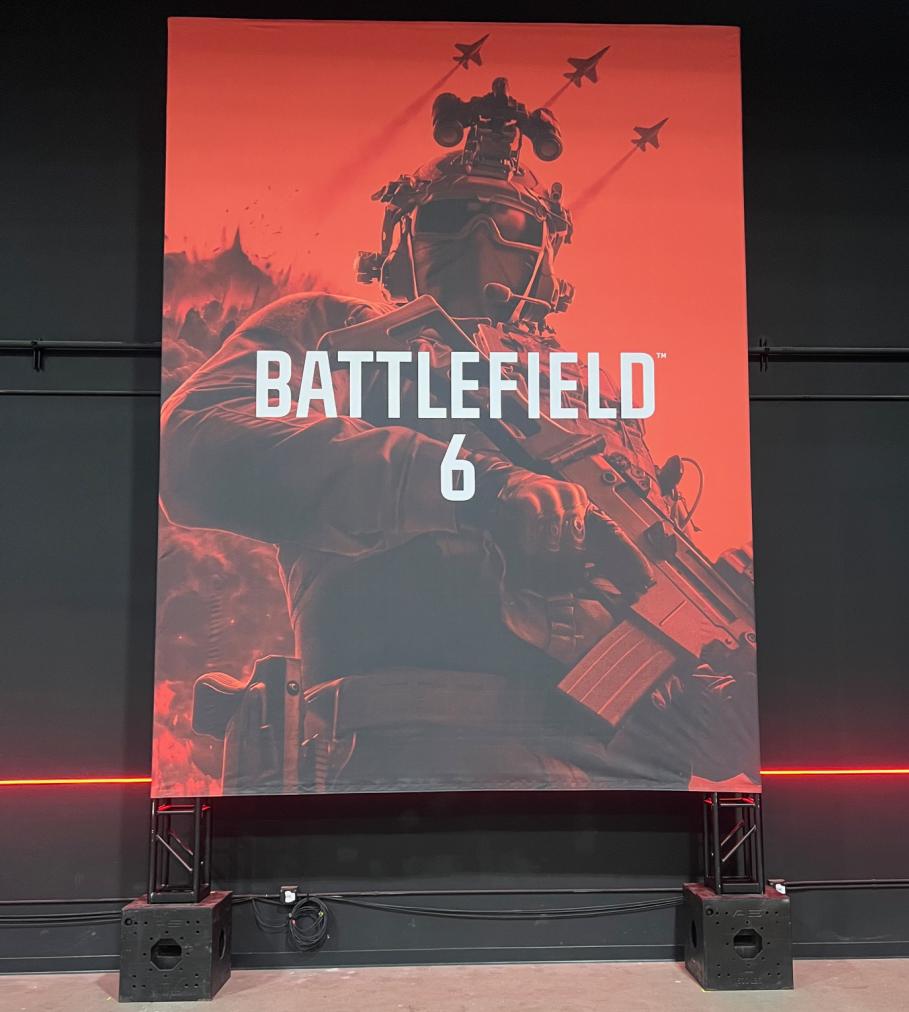
Bringing Game Worlds to Life Through Brand Activation
Physical activations take digital assets and turn them into tangible experiences that fans can explore and interact with. A successful brand activation goes beyond aesthetics—it immerses participants in the game world while reinforcing your brand message.
Translating in-game visuals into real-world installations requires careful planning, high-quality materials, and a clear understanding of how fans engage with the space.
Large-format signage and murals that mirror in-game aesthetics
Murals and wall graphics can recreate iconic environments from the Battlefield game or other titles. High-resolution prints preserve textures, depth, and detail, allowing fans to feel like they’ve stepped inside the game. These installations anchor the activation and serve as visual focal points, drawing attention and creating shareable moments.
Interactive spaces for fans to explore and engage
Engagement goes beyond visuals. Interactive elements like walk-through sets, props, and photo opportunities let fans physically interact with the world you’ve built. These touchpoints create memorable experiences and encourage social sharing, amplifying the reach of the brand activation.
High-quality printed graphics to reflect campaign themes
From banners to point-of-sale displays, every printed element should maintain consistency with the game’s visual identity. Sharp graphics and accurate color reproduction reinforce authenticity, ensuring the activation aligns with both the IP and your brand’s visual standards.
Durable materials for temporary or permanent activations
Physical installations face wear and tear, especially in high-traffic areas. Choosing materials like PVC, acrylic, or laminated prints ensures longevity and maintains quality throughout the campaign. Durable construction allows activations to stay impressive from the first day through the last.
Enhancing Visual Marketing With Immersive Signage
Effective visual marketing transforms digital assets into physical displays that capture attention and communicate your brand story. Signage isn’t just decoration; it guides the audience, reinforces messaging, and creates a cohesive experience that complements the game’s world.
By combining high-quality prints with strategic placement, you can ensure every touchpoint engages fans and strengthens brand recognition.
High-resolution prints and large-scale wall wraps
Large-format graphics maintain clarity and detail even at impressive scales. Wall wraps and murals let fans feel fully immersed in the game world, while crisp visuals prevent distortion or pixelation, preserving the integrity of the original design.
Consistent branding across physical touchpoints
Every activation element—from banners to props—should align with the game’s aesthetic and your brand identity. Consistency strengthens recognition, builds trust, and enhances the overall brand experience.
Strategic placement for maximum fan engagement
Location matters. Positioning signage in high-traffic areas, at photo opportunities, or along natural sightlines ensures your visuals are seen and experienced. Thoughtful placement encourages interaction and increases dwell time.
Integration with AR, lighting, or props for interactive experiences
Layering technology or physical elements on top of prints can heighten immersion. AR overlays, dynamic lighting, and tactile props create multidimensional experiences that extend engagement beyond what static graphics can achieve.
Balancing Scale, Detail, and Brand Experience
Turning digital assets into large-scale physical experiences requires precision. Scaling up a 3D model or game environment can reveal flaws if details aren’t carefully preserved. Maintaining texture clarity, accurate colors, and spatial coherence ensures fans experience the game world authentically while reinforcing your brand experience.
Scaling 3D models into large-format prints without losing clarity
When enlarging digital assets, teams must adjust proportions and refine details so elements don’t appear stretched or blurred. Proper scaling keeps characters, environments, and props visually consistent with their in-game counterparts.
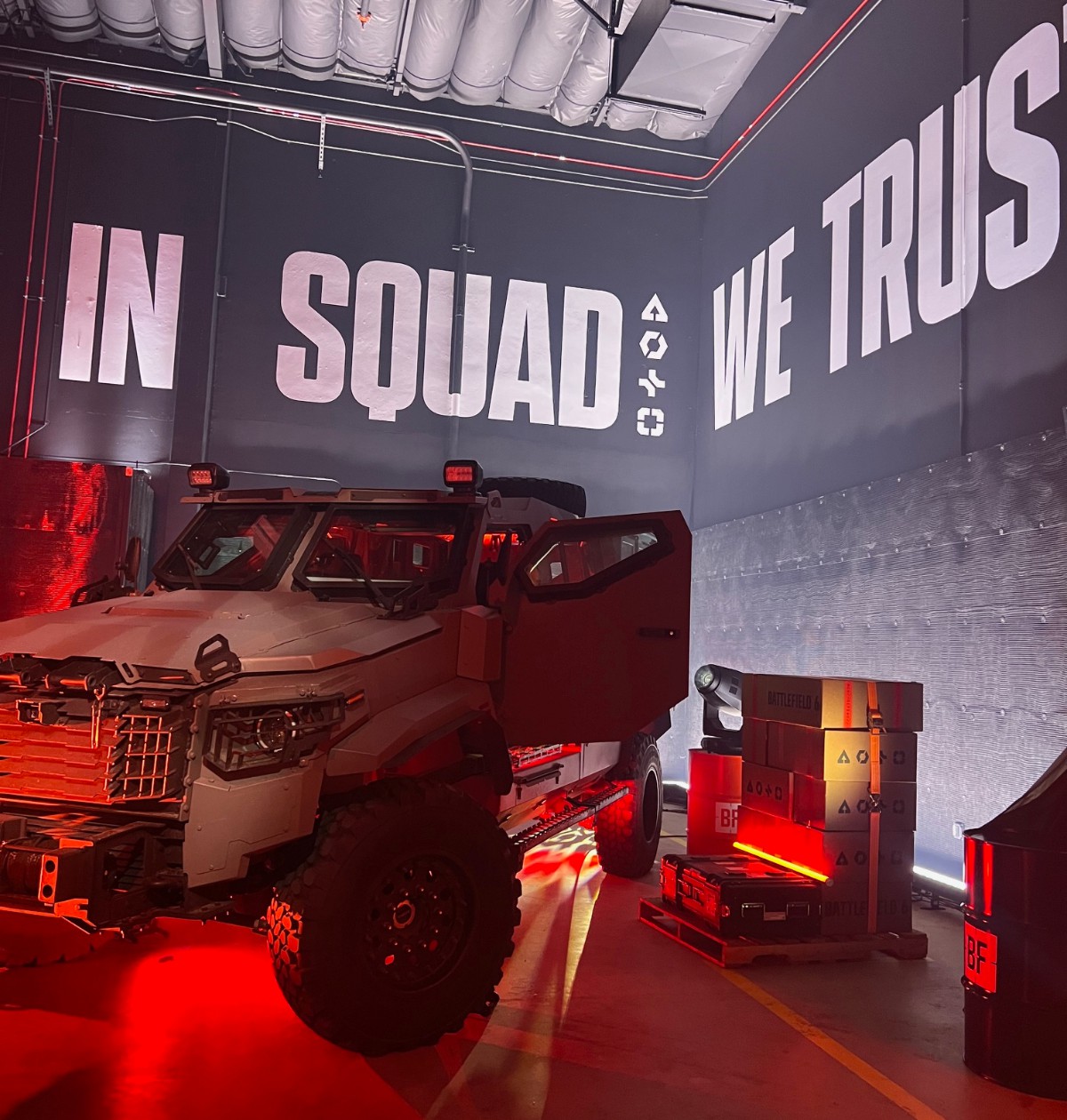
Color calibration to match digital artwork
Colors that look perfect on a monitor can shift when printed on vinyl, fabric, or acrylic. Using calibrated workflows and test prints guarantees fidelity, preserving the intended mood and atmosphere of the original design.
Strategic placement of visual elements to guide audience interaction
Layout isn’t just aesthetic—it drives how fans move through the activation. Positioning signage, murals, and props intentionally directs engagement, encourages exploration, and highlights key branded moments.
Ensuring IP guidelines are maintained across all touchpoints
Adhering to game publisher standards protects both the IP and your brand. Consistent application of logos, typography, and character designs across all physical elements safeguards compliance while reinforcing brand identity.
Game Worlds, Real Impact
Bringing game worlds into the physical space takes more than impressive visuals—it demands careful attention to scale, detail, and audience interaction. Thoughtful design, high-quality materials, and strategic placement transform digital assets into immersive experiences that resonate with fans. A successful activation strengthens engagement and leaves a lasting impression.
For gaming brands looking to make that leap, CR&A Custom offers expertise in large-format printing services that turn digital concepts into tangible, on-brand installations. Our team handles everything from murals and signage to interactive props, ensuring fidelity to the original game while creating memorable brand activation moments.
Partner with CR&A Custom to deliver visually striking, scalable experiences that bring your game worlds to life.
Frequently Asked Questions
Brand activation turns digital game assets into real-world experiences that engage fans. It includes murals, signage, and interactive installations that reflect the game’s visuals and themes.
Maintaining color, lighting, and texture is essential when printing game assets. Designers use high-resolution files, calibrated workflows, and careful material selection to match the original digital visuals.
3D models are adapted for fabrication using materials like PVC, acrylic, or foam. This process ensures props, signage, and installations retain dimensionality, texture, and visual accuracy.
Scaling requires adjusting proportions, preserving detail, and planning spatial layouts. Proper execution ensures murals, banners, and interactive sets remain immersive and visually consistent.
Visual marketing guides placement, design, and interaction, making signage and props attention-grabbing while reinforcing the game’s aesthetic and the brand’s identity.